Pasture Mealybug Confirmed in 16 Florida Counties: What Landowners Need to Know
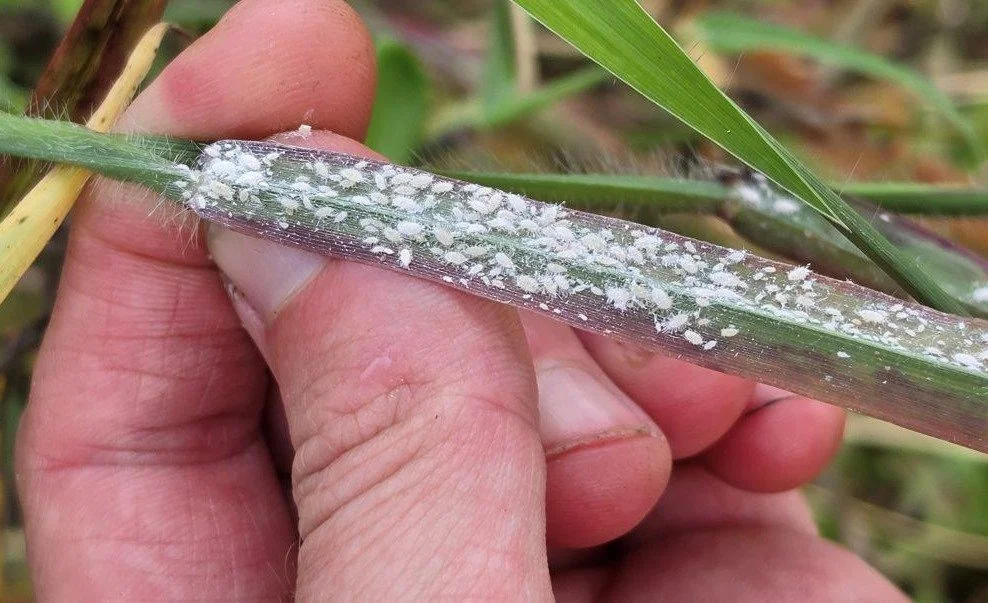
Pasture mealybugs clustered along the underside of a grass blade. Their small size, waxy coating, and hidden feeding behavior can make infestations difficult to detect during routine inspections. Photo Credit: https://blogs.ifas.ufl.edu/nfrec/2026/06/18/pasture-mealybug-detected-in-florida-pastures/
Posted on August 3, 2026
A newly detected invasive insect is spreading across Central and South Florida, raising concerns among researchers, biologists, agricultural professionals, and land managers.
The pasture mealybug(Heliococcus summervillei) has now been confirmed in 16 Florida counties. In Florida, it has been found affecting limpograss, bahiagrass, bermudagrass, crabgrass, sugarcane, and other grasses. The most severe damage reported to date has occurred in limpograss and sugarcane (Florida Department of Agriculture and Consumer Services [FDACS], 2026).
Where Has the Pasture Mealybug Been Found in Florida?
The Pasture Mealybug has been found in the following Florida counties:
Brevard
Charlotte
Collier
DeSoto
Glades
Hardee
Hendry
Highlands
Indian River
Lee
Martin
Okeechobee
Osceola
Palm Beach
Polk
St. Lucie
What Is the Pasture Mealybug?
The pasture mealybug is a small insect that feeds on grasses by removing plant sap. It was first reported in the continental United States in Texas in October 2025 and was later detected in Louisiana. Florida’s first confirmed detection occurred in May 2026 in a limpograss field in St. Lucie County (FDACS, 2026).
The pest has been associated with pasture dieback and declining forage production. Researchers are working to understand how it spreads, which grasses are most vulnerable, and how it can be managed under Florida conditions (Esquivel, 2026; Bauer-Mitchell, 2026).
Although Florida detections have primarily occurred in agricultural settings, the pest’s presence in St. Augustinegrass in Texas raises concerns about its potential to affect managed landscapes in Florida in the future. As of July 2026, FDACS has not reported the pasture mealybug infesting managed turfgrass or residential lawns in Florida (FDACS, 2026; Haddock, 2026).
Why Early Detection and Monitoring Matter
Pasture Mealybugs use piercing mouthparts to remove sap from grasses. This weakens the plants and reduces their ability to tolerate heat, drought, and other environmental stress. Heavy infestations can lead to thinning vegetation, poor root development, widespread dieback, and the loss of large portions of a pasture or field (FDACS, 2026).
The damage can be difficult to diagnose because early symptoms may resemble drought stress, nutrient deficiencies, herbicide injury, disease, chinch bug damage, or other environmental stress. An infestation may already be established by the time it is correctly identified.
Landowners and managers who should be paying attention include:
Ranches and livestock operations
Pastures and hayfields
Mitigation banks
Conservation banks
Ecological restoration projects
Sod farms
Golf courses Homeowners’ associations
Commercial landscapes
Parks and recreational facilities
Municipal properties
Utility corridors
Signs of a Possible Infestation
Early signs of a pasture mealybug infestation may include:
Yellowing grass blades
Red or purple discoloration along the leaves
Rapid browning of vegetation
Grass that appears drought-stressed even after rainfall or irrigation
Stunted growth
Poor root development
Thinning grass cover
Expanding dead areas
Rapid decline across portions of a pasture or field
Symptoms can begin appearing within approximately one week of infestation and may progress to leaf death and the loss of affected grass (FDACS, 2026). Because several other conditions can produce similar symptoms, unusual vegetation decline should be investigated rather than automatically attributed to drought, disease, or nutrient deficiencies.
Why the Insect Is Difficult to Find
Pasture mealybugs are small, white insects covered in a waxy coating that gives them a fuzzy or wool-like appearance. The largest may be approximately the width of a pencil eraser, while younger insects can be much more difficult to see without magnification (Bauer -Mitchell, 2026; Esquivel, 2026).
The insects may remain hidden:
Beneath grass leaves
Around plant crowns and stems
Within the thatch layer
Near or below the soil surface
Around plant roots
Beneath plant debris or dried cattle manure
Their small size and hidden feeding behavior make infestations difficult to detect during routine inspections (Esquivel, 2026; FDACS, 2026). By the time visible symptoms become obvious, the population may already be well established.
Current Recommendations for Managing the Pasture Mealybug
Because the Pasture Mealybug is newly established in Florida, research into effective control methods is still underway.
UF IFAS specialists report that there are currently no insecticides specifically evaluated or labeled for this pest in Florida turfgrass. Current turfgrass guidance is to manage it similarly to other insects that feed on plant sap, including chinch bugs and Tuttle mealybugs. Systemic insecticides are considered the most likely effective approach (Haddock, 2026).
Management may differ among turfgrass, pastures, and sugarcane. In pastures, insects may remain protected within the thatch or soil, which can limit the effectiveness of some contact treatments. Researchers are continuing to evaluate management options and develop longer-term recommendations for Florida (Esquivel, 2026).
Landowners should consult UF IFAS Extension, FDACS, or a qualified pest management professional before selecting or applying any treatment. All pesticide applications must follow the product label and applicable regulations.
Preventing the Spread of the Pasture Mealybug
At Revive Ecosystems, LLC, we believe protecting one property should never come at the expense of another. As part of our standard operating procedures, we inspect and clean our vehicles and equipment before leaving each project site to reduce the risk of unintentionally spreading invasive pests, plant diseases, or invasive plant material.
Equipment sanitation is one of the simplest and most effective ways to help limit the spread of invasive pests. Contaminated mowing and hay-cutting equipment, infested planting material, grass clippings, soil, and plant debris can potentially transport insects between fields and properties.
FDACS recommends using caution when moving equipment, hay, livestock, or planting material between locations. UF/IFAS also recommends removing vegetation and debris from mower decks, trimmers, and other equipment before leaving a property (FDACS, 2026; Haddock, 2026).
Taking a few extra minutes to clean equipment and remove vegetation and debris is a simple but important step toward protecting our clients, neighboring properties, and Florida’s agricultural and natural landscapes.
How Technology Helps Monitor Large Properties
At Revive Ecosystems, LLC, we stay informed about emerging environmental issues so we can help our clients identify and respond to potential threats early. Early awareness and monitoring can help prevent small issues from becoming larger problems.
One way we support proactive land management is through multispectral monitoring technology.
Multispectral imagery can reveal changes in vegetation health that may be difficult to detect during routine ground inspections. Although this technology cannot directly identify the pasture mealybug, it can highlight areas of unusual vegetation stress that may require closer evaluation.
By combining multispectral data with field inspections and GIS analysis, we can:
Monitor vegetation changes over time
Identify areas showing unusual stress
Prioritize ground inspections
Document changing site conditions
Support informed land-management decisions
For large pastures, mitigation banks, conservation banks, and ecological restoration projects, this approach helps focus attention on areas where conditions are changing instead of relying solely on broad visual observations.
Ground verification is always necessary to determine whether vegetation stress is caused by the pasture mealybug, drought, disease, drainage issues, nutrient deficiencies, herbicide injury, or another condition.
What to Do If You Suspect an Infestation
If you observe unusual grass decline or suspect a pasture mealybug infestation:
Take clear photographs of the affected vegetation and any visible insects.
Record the location and approximate size of the affected area.
Avoid moving potentially contaminated equipment, vegetation, soil, or plant material to another property.
Contact your local UF/IFAS Extension office.
Complete the UF/IFAS Pasture Mealybug Report Form.
Submit samples to the FDACS Division of Plant Industry for identification.
UF/IFAS and FDACS encourage suspected infestations to be reported so researchers can confirm identifications, track the pest’s distribution, and improve management recommendations (FDACS, 2026; Haddock, 2026).
Suspected infestations may also be reported to the FDACS Division of Plant Industry Helpline at (888) 397-1517 or DPIHelpline@FDACS.gov(FDACS, 2026).
Looking Ahead
Florida’s warm climate and long growing season create favorable conditions for invasive pests to become established. This emerging pest is another reminder that careful observation, responsible field practices, and proactive monitoring are essential for protecting pastures, working lands, managed landscapes, and natural ecosystems.
At Revive Ecosystems, LLC, we will continue following the latest research and sharing practical information as scientists learn more about this developing threat.
Need Help Monitoring Your Property?
Whether you manage a ranch, mitigation bank, conservation bank, ecological restoration project, golf course, or large commercial landscape, identifying vegetation changes early can make a meaningful difference.
Revive Ecosystems, LLC provides multispectral inspections, GIS mapping, vegetation assessments, and monitoring assistance to help clients track vegetation health, document changing conditions, and identify areas that may require closer evaluation.
To learn more about our services or discuss your property, contact Revive Ecosystems, LLC today.
References
Bauer-Mitchell, M. (2026, July 6). As new invasive species threatens Florida pastures and sugarcane, researchers race to manage pasture mealybug outbreak. University of Florida Institute of Food and Agricultural Sciences. https://blogs.ifas.ufl.edu/news/2026/07/06/as-new-invasive-species-threatens-florida-pastures-and-sugarcane-researchers-racing-to-manage-pasture-mealybug-outbreak/
Esquivel, I. L. (2026, June 18). Pasture mealybug detected in Florida pastures. University of Florida Institute of Food and Agricultural Sciences. https://blogs.ifas.ufl.edu/nfrec/2026/06/18/pasture-mealybug-detected-in-florida-pastures/
Florida Department of Agriculture and Consumer Services. (2026). Pasture mealybug. https://www.fdacs.gov/Agriculture-Industry/Pests-and-Diseases/Plant-Pests-and-Diseases/Pasture-Mealybug
Haddock, S. (2026, July 15). New invasive turfgrass pest: Pasture mealybug. University of Florida Institute of Food and Agricultural Sciences Extension. https://blogs.ifas.ufl.edu/hillsboroughco/2026/07/15/new-invasive-turfgrass-pest-pasture-mealybug/