Two Florida Snakes Become Federally Endangered August 20: What South Florida Project Teams Should Know
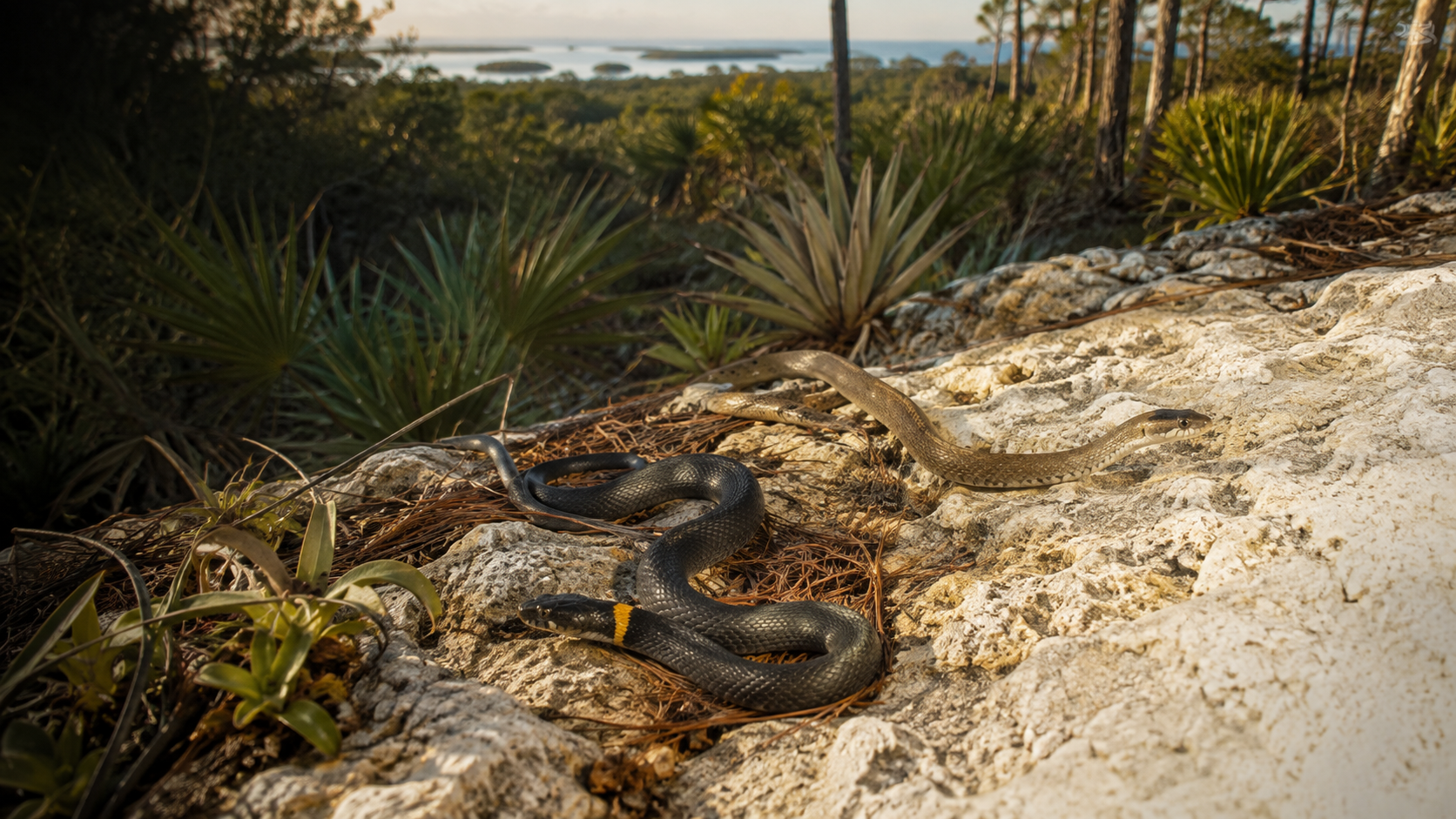
The Key ring-necked snake and rim rock crowned snake inhabit South Florida’s increasingly fragmented pine rockland and rockland hammock habitats. Federal endangered-species protections take effect August 20, 2026.
August 19, 2026
Beginning August 20, projects involving suitable rockland habitat in South Florida will have two additional federally listed species to consider.
The U.S. Fish and Wildlife Service (USFWS) has issued a final rule listing the Key ring-necked snake (Diadophis punctatus acricus) and rim rock crowned snake (Tantilla oolitica) as endangered under the federal Endangered Species Act (ESA).
The rule becomes effective August 20, 2026.
For landowners and public agencies working in Miami-Dade County and the Florida Keys, the change warrants a review of listed-species screening and, where applicable, federal permitting and consultation strategies.
Where Do These Species Occur?
Both species have highly restricted distributions associated with South Florida rockland environments.
According to USFWS, the Key ring-necked snake occurs only in the Florida Keys and inhabits a limited range across seven islands in the lower Keys.
The rim rock crowned snake occurs in portions of Miami-Dade County and the Florida Keys. USFWS identifies populations in fragmented areas of eastern Miami-Dade County as well as islands in both the upper and lower Keys.
The species are associated with limestone outcrops within pine rocklands and rockland hammocks, two habitat types with naturally limited geographic distributions. That makes habitat context particularly important when screening proposed development or infrastructure projects.
Why Were the Species Listed?
USFWS concluded that both species meet the Endangered Species Act's definition of an endangered species.
In the final rule, the agency identified threats including development, fire suppression, and sea-level rise and saltwater intrusion. The analysis for the rim rock crowned snake also discusses habitat fragmentation and other pressures affecting its remaining habitat.
The Key ring-necked snake was determined to be endangered throughout its range. For the rim rock crowned snake, USFWS concluded that the species is likely to become endangered throughout its range within the foreseeable future, but determined that the Florida Keys constitute a significant portion of its range where the species is already in danger of extinction. On that basis, USFWS listed the species as endangered.
What Changes on August 20?
Once the listing becomes effective, the species receive the federal protections applicable to endangered wildlife under the ESA.
Among other provisions, Section 9 of the ESA prohibits unauthorized take of endangered wildlife. The statutory concept of take includes actions such as harming, harassing, pursuing, wounding, killing, trapping, capturing, or collecting listed wildlife.
This does not mean every project within Miami-Dade County or the Florida Keys automatically requires federal consultation or an incidental-take permit. Project-specific circumstances matter.
But where suitable habitat occurs or where project activities could affect one of these species—the federal listing changes the regulatory analysis and should be incorporated into environmental due diligence.
Projects With a Federal Nexus Should Revisit Section 7 Screening
Section 7 of the Endangered Species Act applies to actions that federal agencies authorize, fund, permit, or carry out when there is discretionary federal involvement or control.
Federal agencies must ensure that their actions are not likely to jeopardize listed species or destroy or adversely modify designated critical habitat.
For projects with an applicable federal nexus, teams should therefore consider whether existing biological reviews or species lists need to be updated to include the two newly listed snakes.
Examples could include projects requiring certain federal permits, approvals, or funding, although the applicability of Section 7 depends on the specific federal action involved.
Early screening can be particularly valuable where project design, grading, vegetation clearing, rock disturbance, access routes, utilities, or other activities may overlap suitable habitat.
What About Projects Without a Federal Nexus?
The federal take prohibition is also relevant to non-federal activities.
For otherwise lawful non-federal projects that may result in incidental take of listed wildlife, Section 10 of the ESA provides a process for obtaining an incidental take permit. Such applications generally require a habitat conservation plan addressing impacts and measures to minimize and mitigate them.
Whether that pathway is needed is highly project-specific and should be evaluated based on habitat, species presence or potential presence, proposed activities, and applicable agency guidance.
One Important Distinction: No Critical Habitat Was Designated in This Final Rule
USFWS previously proposed critical habitat for the two species, but the July 2026 final listing rule does not designate critical habitat.
USFWS specifically notes that listed species receive ESA protections regardless of whether critical habitat has been designated.
That distinction matters. A project's species-compliance responsibilities do not disappear simply because no critical habitat designation accompanies the listing.
Conversely, project teams should not represent areas as federally designated critical habitat for these species when that designation has not been finalized.
What South Florida Project Teams Should Do Now
For projects in Miami-Dade County and the Florida Keys, especially those involving pine rockland, rockland hammock, exposed limestone, or other potentially suitable habitat, now is a reasonable time to revisit environmental screening.
Teams should consider:
updating current federal listed-species reviews;
confirming whether suitable habitat occurs within or near the project footprint;
reviewing planned ground disturbance and vegetation clearing;
identifying any federal permits, funding, or approvals that could create a Section 7 nexus;
evaluating whether additional species surveys or agency coordination may be appropriate;
incorporating potential ESA considerations into project scheduling; and
documenting the basis for species-effect conclusions.
The appropriate level of review will vary substantially by site.
Early Review Can Reduce Project Surprises
New listings do not necessarily prevent development or infrastructure work. They do, however, create new compliance considerations that can influence project design, permitting pathways, survey needs, agency coordination, and schedules.
Projects already underway can be particularly vulnerable to delays if environmental reviews rely on outdated species lists or if a newly protected species is identified late in the design or permitting process.
For that reason, teams working in potentially suitable South Florida rockland habitat should consider the August 20 effective date a trigger to review existing screening rather than waiting for the next major permitting milestone.
How We Can Help
For South Florida projects, early recognition of habitat constraints can help teams identify issues while there is still flexibility to evaluate avoidance, minimization, permitting, and restoration strategies.
If you are planning or permitting a project in Miami-Dade County or the Florida Keys, contact Revive Ecosystems, LLC to discuss updated listed-species screening and environmental planning and mitigation considerations.
Sources
1. U.S. Fish and Wildlife Service, “Endangered Species Status for Key Ring-Necked Snake and Rim Rock Crowned Snake,” Final Rule, 91 Fed. Reg. 45697, July 21, 2026; effective Aug. 20, 2026. https://www.federalregister.gov/documents/2026/07/21/2026-14637/endangered-and-threatened-wildlife-and-plants-endangered-species-status-for-key-ring-necked-snake
2. U.S. Fish and Wildlife Service, “Final Listing of Key Ring-necked Snake and the Rim Rock Crowned Snake—Frequently Asked Questions.” https://www.fws.gov/question-answer/final-listing-key-ring-necked-snake-and-rim-rock-crowned-snake-frequently-asked
3. U.S. Fish and Wildlife Service, “U.S. Fish and Wildlife Service Lists Two Florida Snakes as Endangered,” July 2026. https://www.fws.gov/press-release/2026-07/us-fish-and-wildlife-service-lists-two-florida-snakes-endangered