World Wetlands Day: Why Wetlands Matter and Why Florida Must Lead
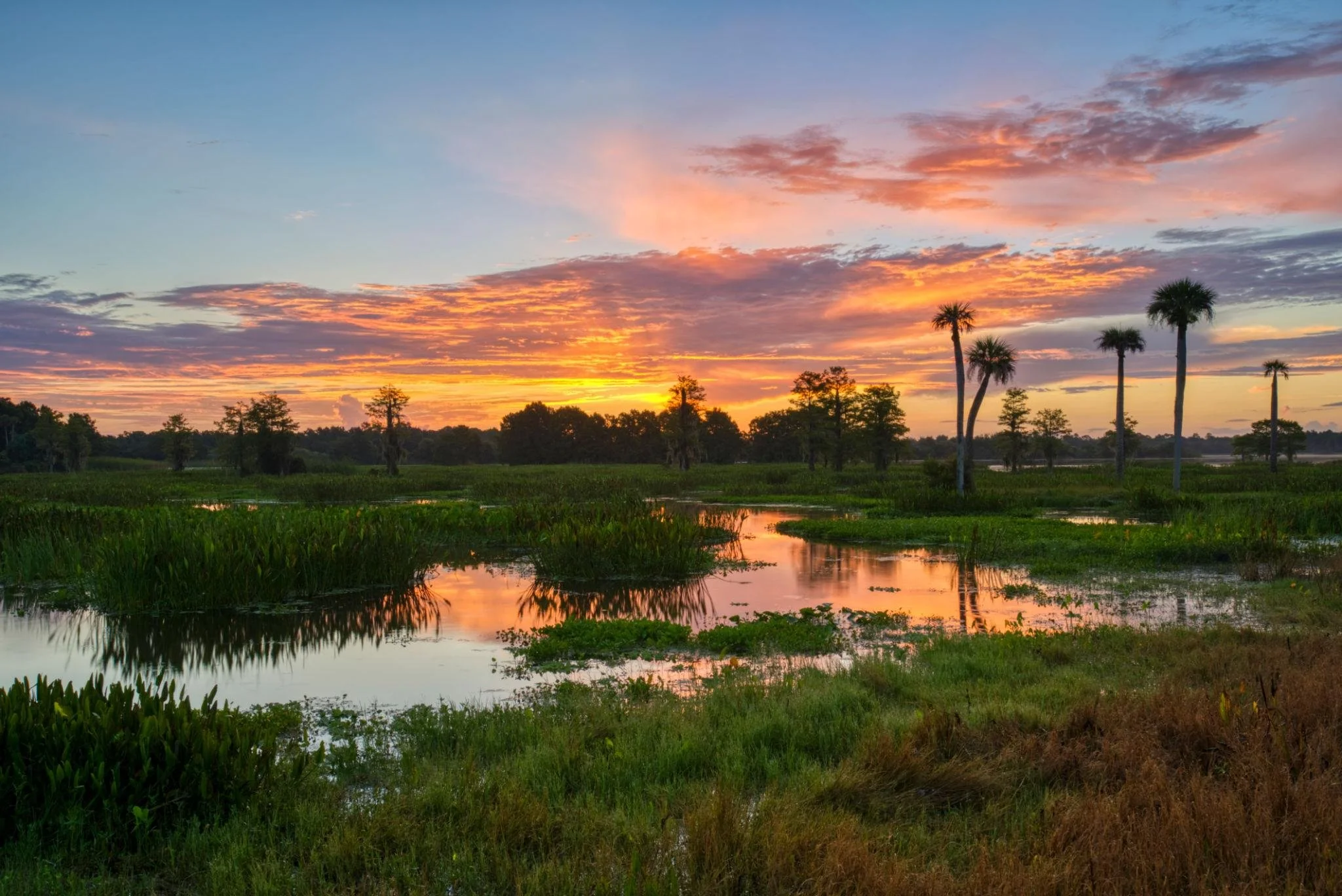
Sunrise over a Florida Wetland
Posted on February 2, 2026
Every year on February 2, World Wetlands Day invites us to pause and recognize one of the planet’s most valuable and misunderstood ecosystems: wetlands. Often viewed as obstacles to development or land use, wetlands are, in reality, some of the most productive natural systems on Earth, quietly supporting water quality, wildlife, climate resilience, and human communities.
In Florida, honoring World Wetlands Day is more than symbolic. It is essential.
What Is World Wetlands Day?
World Wetlands Day marks the anniversary of the signing of the Ramsar Convention on Wetlands, an international treaty adopted on February 2, 1971, in Ramsar, Iran. The Convention was created in response to the rapid global loss of wetlands and the growing recognition that these ecosystems provide irreplaceable ecological, economic, and social benefits.
Today, the Ramsar Convention serves as the primary global framework for wetland conservation and wise use, with more than 170 countries participating and thousands of wetlands designated as “Ramsar Sites” of international importance.
At its core, Ramsar promotes a simple but powerful idea: wetlands should not merely be preserved in isolation, but managed thoughtfully so they continue to function alongside human land use.
What Ramsar Really Means
Ramsar is not just about protection—it is about balance.
The Convention emphasizes:
Maintaining wetland ecological character
Supporting sustainable development
Recognizing wetlands as critical infrastructure
Encouraging science-based land and water management
This philosophy aligns closely with modern mitigation and restoration approaches, where the goal is not to halt progress but to ensure development accounts for ecological function and long-term resilience.
Wetlands, Development, and Responsibility
In Florida, wetlands sit at the intersection of growth and conservation. Roads, housing, utilities, and agriculture all rely on land that was once wetland-dominated. The challenge is not choosing between development and wetlands, but ensuring that impacts are addressed responsibly.
This is where mitigation banking and ecological restoration play a critical role. Properly designed mitigation banks do more than offset impacts. They restore hydrology, improve habitat connectivity, and secure wetlands in perpetuity. When done right, mitigation transforms regulatory requirements into long-term ecological assets.
World Wetlands Day is a reminder that wetlands are not interchangeable acreage. Their function, location, and connectivity matter. Protecting and restoring high-quality wetlands is essential to Florida’s future.
Our Commitment to Wetlands
At Revive Ecosystems, LLC, wetlands are not abstract concepts or line items on a permit. They are living systems that require careful evaluation, scientific understanding, and thoughtful planning.
Our work focuses on:
Assessing wetland function and landscape context
Supporting mitigation banking and restoration strategies
Helping landowners and developers navigate regulatory requirements with clarity
Aligning conservation outcomes with responsible land use
We believe that lasting conservation begins with understanding how land works through hydrology, soils, vegetation, and wildlife, and then using that understanding to create solutions that endure.
World Wetlands Day reinforces what guides our mission every day: wetlands are not constraints to work around, but foundations to build upon.
Looking Forward
As Florida continues to grow, the choices made today will determine whether wetlands remain a defining strength or a diminishing memory. Honoring World Wetlands Day is not just about awareness. It is about stewardship, accountability, and long-term thinking.
By recognizing the value of wetlands and committing to science-based conservation and mitigation, we can ensure these ecosystems continue to protect water, wildlife, and communities for generations to come.
At Revive Ecosystems, LLC, we are proud to be part of that work reviving landscapes, restoring function, and helping Florida move forward with certainty and care. Learn more about us here.