Regulatory Update: Wood Stork Removed from Federal Endangered Species List
Posted on February 23, 2026
The Wood Stork has officially been removed from the federal list of endangered and threatened wildlife.
When the species was listed under the Endangered Species Act in 1984, its population had declined by more than 75 percent, primarily due to wetland loss and hydrologic alteration in the Southeast, particularly South Florida.¹
At the time of listing, nesting colonies and breeding pairs had significantly decreased. Today, federal estimates indicate:
10,000–14,000 nesting pairs
Approximately 100 colony sites across the Southeast
More than double the nesting pairs compared to when listed
More than triple the colony sites compared to when listed²
These figures formed the basis for determining that recovery criteria established in the federal recovery plan had been met.
The Species and Its Habitat
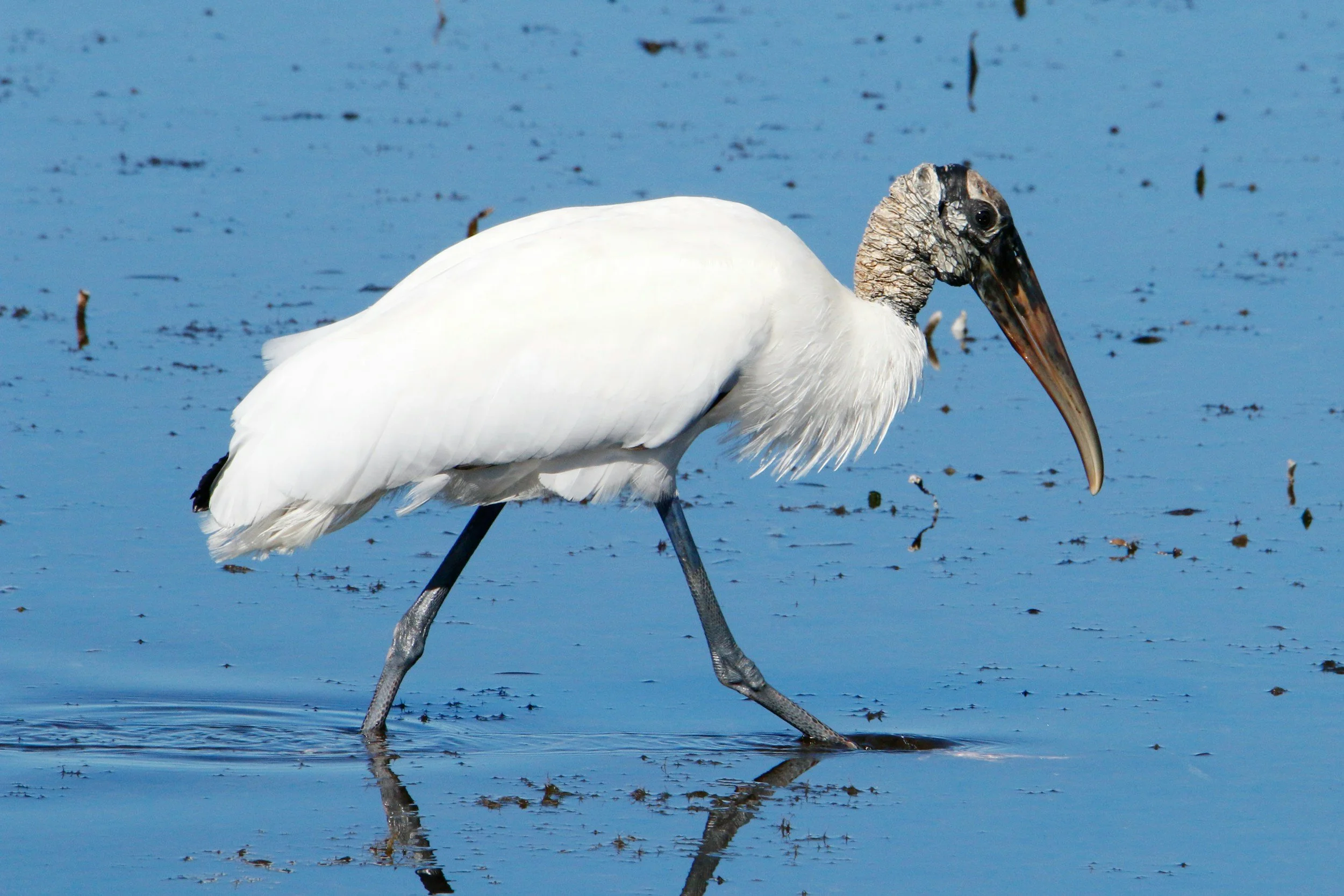
The wood stork is a large wading bird native to the southeastern United States. It nests colonially, typically in trees over standing water, and forages in shallow wetlands.
According to the U.S. Fish and Wildlife Service (USFWS), successful nesting is closely linked to seasonal water level recession patterns that concentrate fish and aquatic prey in shallow areas.³ Alterations to wetland hydrology historically reduced foraging efficiency and nesting success in parts of its range.
The Recovery Process
Under the Endangered Species Act, species may be delisted when the best available scientific and commercial data demonstrate that they no longer meet the definition of threatened or endangered.⁴
The USFWS 1997 Revised Recovery Plan for the Wood Stork established population and distribution benchmarks.⁵ Long-term monitoring conducted by federal and state agencies documented sustained increases in nesting pairs and colony sites across the Southeast.
Based on those data, the U.S. Fish and Wildlife Service issued a final rule removing the wood stork from the federal list of threatened and endangered wildlife after determining recovery objectives had been achieved.²
What Delisting Means
Removal from the federal list does not eliminate oversight. Section 4(g) of the Endangered Species Act requires post-delisting monitoring for at least five years to ensure the species remains secure.⁴
Primary management responsibility transitions to state and tribal wildlife agencies, including coordination with federal partners where applicable.
A Documented Outcome
The wood stork’s removal from the endangered species list reflects measured increases in nesting pairs and colony distribution relative to listing conditions, as documented by federal recovery criteria and monitoring data.
Recovery.
Accountability.
Measurable progress.
Government Sources
U.S. Fish and Wildlife Service. 1984. Final Rule to List the Wood Stork as Endangered. Federal Register 49 FR 7332.
U.S. Fish and Wildlife Service. 2023. Final Rule Removing the Wood Stork (Mycteria americana) from the Federal List of Endangered and Threatened Wildlife. Federal Register.
U.S. Fish and Wildlife Service. Wood Stork (Mycteria americana) Species Profile. Environmental Conservation Online System (ECOS).
Endangered Species Act of 1973, as amended (16 U.S.C. §1531 et seq.), Section 4.
U.S. Fish and Wildlife Service. 1997. Revised Recovery Plan for the U.S. Breeding Population of the Wood Stork. Atlanta, Georgia.