Spring Monitoring at Lucky L Mitigation Bank: Tracking Ecological Performance Across Restored Habitats
Posted on June 11, 2026
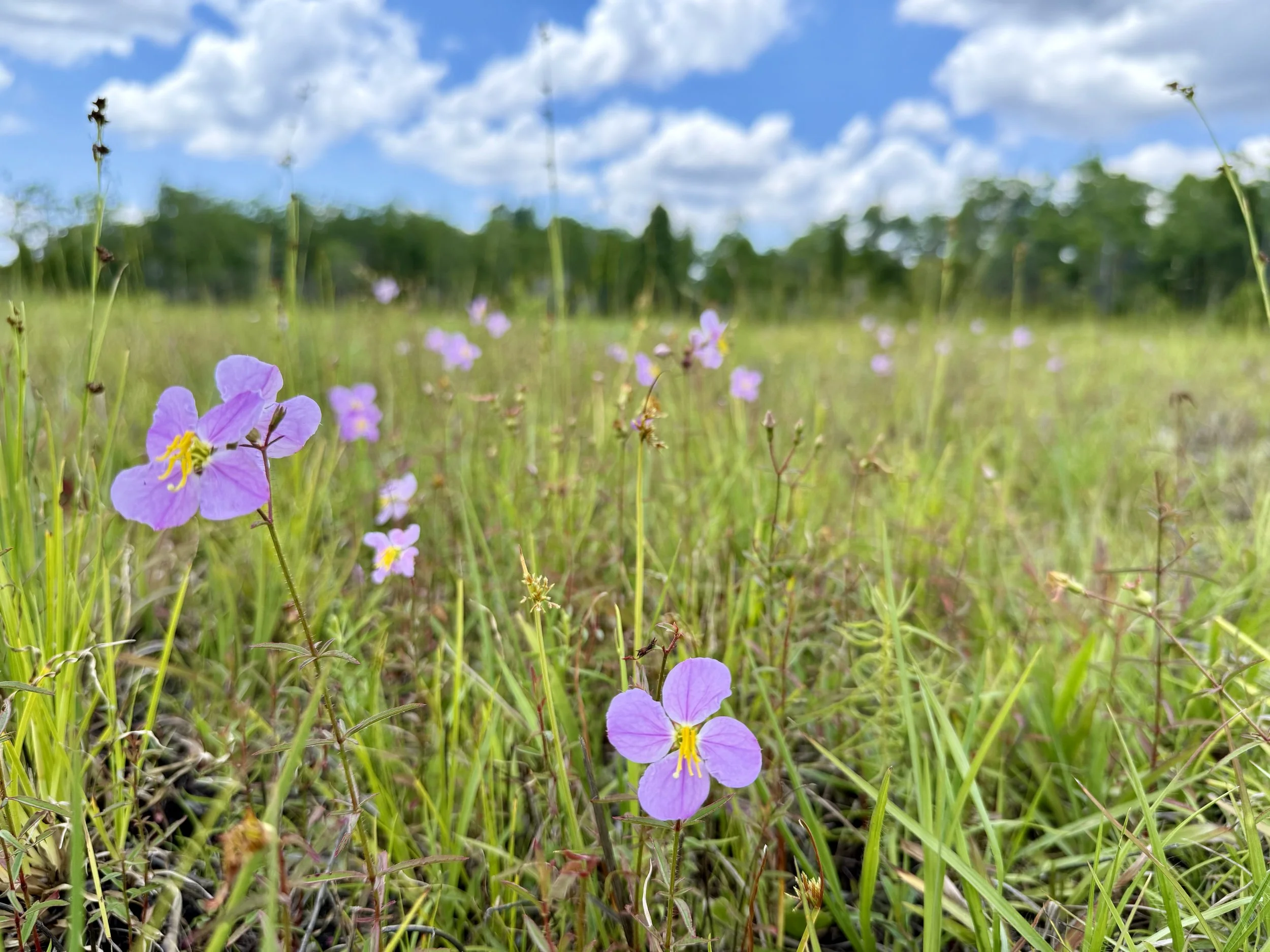
Native beauty in bloom at Lucky L Mitigation Bank.
Rhexia mariana, commonly known as Maryland meadow beauty, is a Florida native found throughout marshes, bogs, prairies, and flatwoods. Moments like these are a reminder that healthy landscapes support both ecological function and the natural character of the region.
Mitigation banking is often viewed through the lens of credits, permits, and regulatory compliance. However, the foundation of every successful mitigation bank is ecological performance. Spring monitoring provides one of the most important opportunities each year to evaluate whether restored and preserved habitats are functioning as intended.
At Lucky L Mitigation Bank, spring marks a period of increased biological activity, making it an ideal time to assess vegetation communities, hydrologic conditions, wildlife utilization, and overall ecosystem health.
Why Spring Monitoring Is Important at Lucky L Mitigation Bank
Florida’s seasonal transition from winter into the wet season triggers significant ecological responses across wetland and upland habitats.
Many native plant species initiate new growth, amphibians begin breeding activities, wildlife movement increases, and hydrologic conditions become more representative of the site's long-term function.
These seasonal dynamics provide valuable indicators used to evaluate mitigation bank success, including:
Vegetative community establishment
Native species recruitment
Hydrologic performance
Wildlife utilization
Invasive species management effectiveness
Long-term ecological trajectory
Monitoring data collected during this period helps determine whether restoration activities are meeting permit performance standards while also documenting ecological trends over time.
Vegetation Monitoring: The Foundation of Wetland Success
One of the primary goals of mitigation bank spring monitoring at Lucky L Mitigation Bank is to evaluate vegetation communities.
Our team assesses:
Species composition
Native versus exotic cover
Canopy development
Shrub and ground cover recruitment
Wetland indicator status
Community structure
During spring monitoring, native wetland indicator species were observed throughout, including wet prairie, forested, and transitional wetland communities. The presence and recruitment of native hydrophytic vegetation provide important evidence that restored habitats are developing toward target ecological conditions.
These metrics help show whether habitats are progressing toward meeting permit conditions and the bank’s mitigation plan. Successful wetland restoration is not measured simply by plant survival. The goal is the development of self-sustaining native communities capable of supporting ecological functions over the long term.
Hydrology Drives Ecological Function
Hydrology remains one of the most critical factors influencing wetland performance.
Spring monitoring allows us to evaluate:
Surface water distribution
Hydroperiod development
Soil saturation patterns
Wetland connectivity
Water storage capacity
Proper hydrologic conditions influence everything from vegetation establishment to wildlife utilization. When hydrology functions as designed, restored wetlands are better able to support nutrient cycling, flood attenuation, groundwater recharge, and habitat diversity.
Seasonal wetlands and wet prairie systems are particularly important because they provide habitat conditions that support a wide range of specialized plant and animal species that depend on periodic inundation and seasonal drying cycles.
Long-Term Data Creates Long-Term Value
The true value of mitigation bank monitoring lies in the ability to evaluate trends over time.
Each monitoring event contributes to a larger dataset that helps document:
Habitat development
Restoration effectiveness
Adaptive management needs
Permit compliance
Ecological resilience
These long-term records allow us to understand how restored ecosystems evolve and respond. Monitoring data collected today provides critical information for evaluating future performance and ensuring that restoration goals continue to be achieved.
Restoration Beyond Compliance
At Lucky L Mitigation Bank, spring monitoring combines vegetation assessments and wildlife documentation to evaluate ecological performance across restored wetland and upland habitats.
This year’s observations continue to highlight the diversity of species on the bank. As restoration areas continue to mature, long-term monitoring remains essential for documenting ecological trends, guiding adaptive management, and ensuring the bank continues progressing toward its restoration goals.
Looking for Ecological Monitoring Expertise?
Revive Ecosystems, LLC offers ecological monitoring, mitigation bank management, habitat assessments, and mitigation oversight services throughout Florida.
Our team helps clients evaluate ecological performance, maintain permit compliance, and document restoration success through science-based monitoring programs.
Contact us today to learn more about our ecological monitoring services.
References and Resources
Florida Department of Environmental Protection (FDEP). Uniform Mitigation Assessment Method (UMAM), Chapter 62-345, Florida Administrative Code.
U.S. Army Corps of Engineers and U.S. Environmental Protection Agency. Compensatory Mitigation for Losses of Aquatic Resources (33 CFR Part 332 and 40 CFR Part 230).
Florida Fish and Wildlife Conservation Commission (FWC). Native Wildlife Species and Habitat Resources.
Florida Natural Areas Inventory (FNAI). Guide to the Natural Communities of Florida.
University of Florida Institute of Food and Agricultural Sciences (UF/IFAS). Wetland Ecology and Native Plant Resources.
U.S. Department of Agriculture, Natural Resources Conservation Service (NRCS). Hydric Soils and Wetland Indicators Resources.